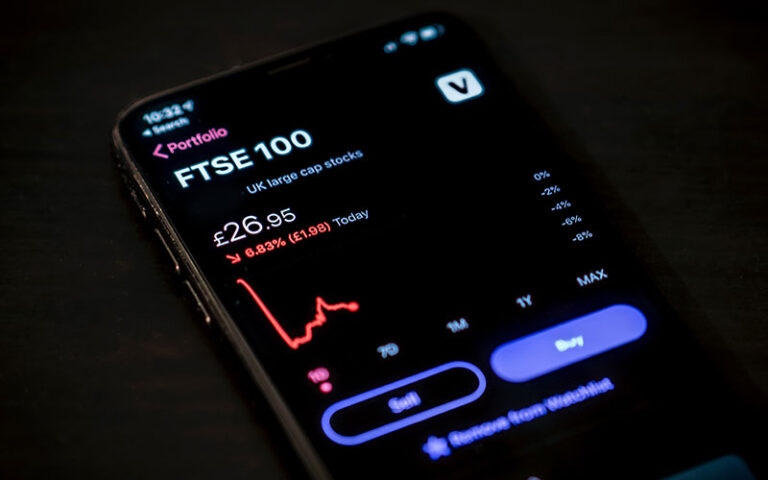

Volatility, in the world of finance, is the rapid and mostly unpredictable changes of the price of stocks or currencies. It's like a roller coaster ride for investors – full of twists, turns, ups and downs.
Volatility is a normal and expected part of investing, but it’s not as widely understood as it perhaps should be. In this guide, we’re going to demystify volatility to help you understand your options and make the best investment choices.
What does ‘volatility’ mean?
Simply put, volatility is how much an asset or stock price changes over a specific period of time. It measures how much the price moves up or down, and how frequently these movements occur.
Like a rollercoaster, the stock market can have its ups and downs. Volatility is like the twists, turns, and loops along the ride – they’re normal and should be expected, but they're not always enjoyable!
The more the price of a stock changes, the more volatile that market is said to be.
Types of volatility
There are two main types of volatility: implied and historical.
Understanding how they're different can help you better assess the risks and opportunities of investing in a particular asset or stock.
Implied volatility
This is how much the market expects prices to change. It's based on how much the cost of stocks are predicted to be in the future.
Imagine a tech company, XYZ Inc., is about to release its quarterly earnings. The market is uncertain about how the price will change, which results in a high implied volatility. This suggests that investors expect the stock price to swing wildly in response to the earnings announcement.
Historical volatility
As the name suggests, historical volatility looks at how the price of stocks have changed in the past. It measures the actual volatility that the stock experienced over a specific period.
Let's say that XYZ Inc. has a history of large price swings. Investors would consider this high historical volatility when deciding whether to invest in the company, as they know that the stock tends to be volatile (the stock price tends to change rapidly).
How does market volatility impact investments?
Market volatility can have a significant impact on investments.
Stocks with high volatility can be riskier because they have a greater chance of big losses or gains. The price is constantly changing and can experience large swings in a short period – this can be both a blessing and a curse for investors!
High volatility
High volatility can present opportunities to make substantial gains.
When a stock's price is fluctuating rapidly, there is opportunity for quick and potentially lucrative trades. For example, if you buy a stock at a low price and then sell it at a higher price, you could make a good profit.
On the other hand, high volatility often comes with more risk.
This is because the price of volatile stocks is highly sensitive to market conditions and can quickly decline. If you buy a stock at a high price, but the price then drops, you may make significant losses if the stock's price plummets.
Low volatility
Investors consider stocks that have a more stable price to have low volatility and therefore they're often seen as less risky.
Low volatile stocks have less potential to make money, but can also be less likely to experience significant losses (although this isn't guaranteed).
So, which is better for investments?
Let's consider two hypothetical stocks: Stock A and Stock B.
Stock A has a history of high volatility, with its price frequently experiencing large swings. Stock B, on the other hand, has low volatility and its price tends to be relatively stable.
If you decide to invest in Stock A, you should prepare for the possibility of big gains or losses. The stock's price may increase rapidly – but it could also decline just as quickly.
But if you choose to invest in Stock B, you can expect a more stable investment. While the potential gains may be smaller compared to Stock A, the chances of experiencing significant losses are also smaller.
Ultimately, the choice between low- and high-volatility stocks depends on how much risk you're prepared to take with your money.
How to manage volatility
Market volatility can be unsettling for investors, but there are strategies you can use to manage its impact.
Here are some tips for managing market volatility:
Investing with OneFamily
Our Stocks and Shares ISA invests in the stock market on your behalf, so it could be a good way to start exploring investing, especially as it comes with just three simple fund choices. We charge 1.1% Annual Management Charge and no platform- or fund-level fees.
Like with all investments, the value is likely to go up and down over time so there is a risk that your investment could be worth less at the time you choose to withdraw your money.