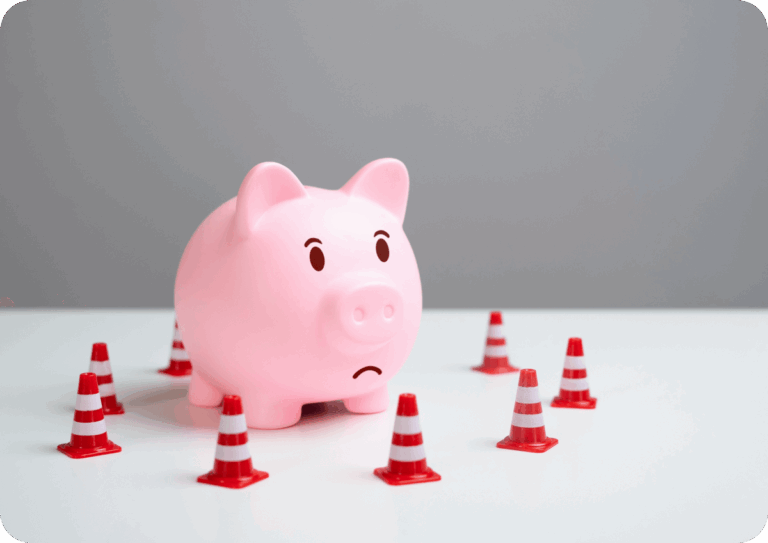

When putting money away for the future, you can choose to save it in a savings account, where it will grow with interest rates, or you can invest it in an investment fund, which buys various different types of investments.
What's the difference between saving and investing?
Stocks and shares (investment) accounts and savings accounts can both be used to put money away for the future.
But they differ in two main ways:
- how they make money
- how risky they are (to be clear, when we talk about risk, we mean the risk of ending up with less money than you started with).
Saving vs investing
The table below shows the key differences between savings accounts and investment (stocks and shares) accounts:
| Investing (stocks and shares account) | Saving (savings account) |
|
|---|---|---|
| How do they make money? | Your money is invested in things like shares in companies, property and corporate and government bonds. The value increases (or decreases) depending on the value of the shares. | Your money grows by a percentage of how much you have saved. The exact percentage depends on interest rates. |
| Can you lose money? | Yes. The amount of money you have in the account can go down. | No. However, the "value" of the money can go down, which is when the price of goods you might want to buy increases by more than the amount of interest you make on your money. |
Balancing the risks of saving and investing
Investing is generally riskier than putting your money in a savings account, but it also means there's potential for your money to grow more.
For example, as there’s no limit to how much companies can grow, investing in company shares has a higher potential to make you money.
But it comes at a risk – companies can shrink as well as grow and you could get back less than you put in, depending on what’s happening with your shares when you choose to sell your investments (ie withdraw your money).
With savings accounts, how much money you make depends on interest rates. You can’t technically lose money, but it's worth considering whether the interest rate will beat inflation.
If not, you could be losing money in "real terms", which is when the price of the things you want to buy goes up faster than the amount of interest your savings make.
Stock market fluctuations tend to level-out in the long-term, but generally speaking stocks and shares accounts might not a good idea if you're wanting to keep your money invested for less than five years.
Choosing between saving money in cash and investing it in stocks and shares
Ultimately, the right choice for you depends on how much risk you're willing to take with your money and how long you want to save for.
If you're looking to put money aside for a fairly short period of time, then a savings account might be the right option for you. But the longer you save for, the less risk there is with stocks and shares investing.
This is because over time any fluctuations in the stock market tend to level out, like when you zoom out on a graph. If there's a dip in the value of your account, there's a good chance that this will recover later on. It only becomes a problem if the dip comes at the time when you want to withdraw your money.
If you are looking to go down the investment route, we have two products that invest in stocks and shares:
Our Stocks and Shares ISA and Lifetime ISA both invest in stocks and shares. The value of your investment is likely to go up and down over time. This is normal for this type of investment but you could get back less than you've paid in if you withdraw at a time when the value is lower.