

Frankie Entwistle 🞄 Updated: March 2026

Written by a human, not AI
If you don’t have an emergency fund, you’re not alone. Almost half of young people in the UK don’t have money put aside for emergencies.
So, if they can’t work, they don’t have money to support themselves easily available.
It’s a worrying picture but the good news is, if you’ve reached this article, you’re ready to do something about it!
What does the research say?
Almost half (44%) of the 2,000 18-40 year olds we spoke to don’t put money aside for situations where they’re not able to work, for example if they become ill or are injured, or if they’re made redundant.
That equates to roughly 7 million people without a back-up plan!
If you’re a woman, it’s even more likely that you don’t have an emergency fund.
Almost half of the women we surveyed (48%) said they never or rarely put money aside for emergencies, compared to 40% of men.
This may not be an active choice, factors such as the gender pay gap and increased caring responsibilities leaving women with less disposable income are likely to have contributed to this difference.
Marriage also increases your likelihood of putting money aside, with 63% of married people saying they regularly build their emergency fund, compared to just 43% of non-married people.
And you'll be unsurprised to hear that homeowners are more likely than renters to be putting money away in case they find themselves out of work. In fact, 57% of homeowners say they are saving for emergencies, while only 45% of renters said the same.
What is an emergency fund for?
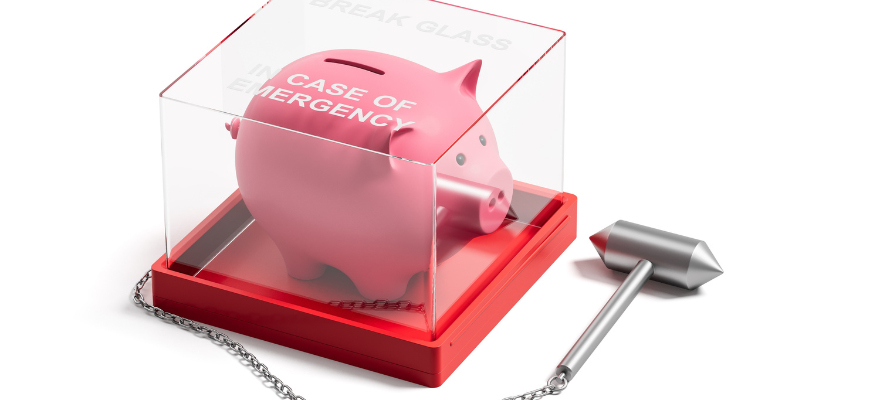
While your budget should pay for the costs you know are coming up, your emergency fund is there to cover costs you didn’t expect.
That could be something one-off like a parking ticket or household repairs, or it could be something more long-term. If you lost your job, your emergency fund could help you cover your living costs while you get back on your feet.
How to build your emergency fund
It’s recommended to have enough money saved to cover your monthly outgoings for three to six months. But we know this isn’t always realistic and it can take time to get to that level of financial security.
A less daunting way to approach your emergency fund is to simply make sure you’re putting away what you can afford each month. It’s great to have a target in mind, but trying to reach it too quickly can over-stretch you and make it feel impossible.
Having £100 in your emergency fund is a lot better than having no emergency fund at all!
Take a look at our emergency fund guide for hints and tips to change your attitude to money and become one of those smug, financially secure people.
Interested in our research? Our press release contains more details.